
GLP-1 Medications
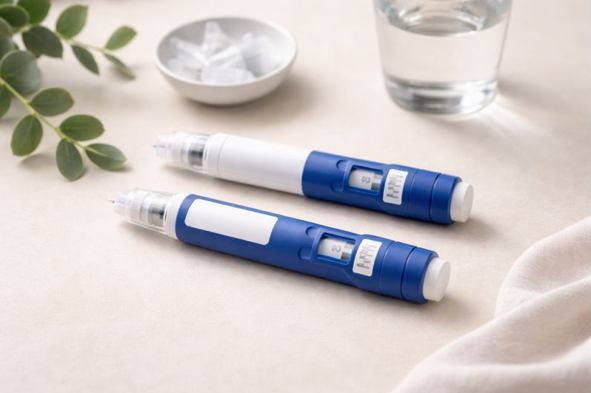
GLP-1 (Glucagon-Like Peptide-1) agonists are medications which were originally developed to help manage type 2 diabetes, however in recent years they have also been prescribed to support medical weight management. These medications work by mimicking a natural hormone called GLP-1, which your body releases after eating. This hormone works by signaling your pancreas to release insulin, helping to regulate blood sugar and slowing the emptying of the stomach - leading to a feeling of increased fullness, better glucose control and significant weight loss.
While the primary goal of GLP-1 therapy is metabolic, improving blood sugar control and supporting weight reduction - these medications often provide broader health benefits. For women, this may include improvements in hormonal balance, ovulation, and menstrual regulation, all of which may indirectly support fertility.
Although GLP-1 medications are not fertility drugs, they may have indirect effects on reproductive health, particularly for those with Polyendocrine Metabolic Ovarian Syndrome (PMOS).
A common barrier to conception in PMOS is insulin resistance, which can disrupt hormone balance, increase androgen levels and interfere with ovulation. By improving insulin sensitivity, and promoting stable blood sugar levels, GLP-1 medications may support reproductive health through benefits such as:
- Restored menstrual regularity and ovulation
- Reduced androgen levels in PMOS
- Healthier metabolic profile prior to conception.
While GLP-1 medications can play a valuable role before conception, they are not considered safe during pregnancy.There is a lack of human safety data and animal studies have shown potential harm. Consequently, regulatory authorities including the Therapeutic Goods Administration (TGA), advise against GLP-1 usage during pregnancy and recommend a tapering period before trying to conceive.
As GLP-1 medications become more widely used, questions arise about their role during fertility treatments such as IVF. Working closely with your fertility specialist is critical, as they can support you in determining when to stop GLP-1 therapy safely before IVF or conception, monitor health during the transition and coordinate care and support.
While GLP-1 medications have transformed the landscape for metabolic and reproductive health, there is still a lot we don’t know about their direct impact. Current guidance is largely based on animal studies, little data on human trials, and early registry data - here’s what is still being investigated:
- Long-term pregnancy safety
- Impact on egg and embryo quality
- Tapering strategies
- Long-term maternal health
- Future research directions
GLP-1 medications have opened an exciting new prospect in reproductive medicine, bridging the gap between metabolic health and fertility potential. While early research is promising, more evidence is needed. The safest and most effective approach is to work closely with your fertility specialist.
With careful planning and guidance, you can give yourself a safe and informed fertility journey.
https://www.tga.gov.au/sites/default/files/2024-09/auspar-wegovy-240904.pdf

Start your
fertility journey
We're specialists in optimising natural fertility and providing the latest IVF treatments.
Contact us
Phone: (07) 3394 4108
Freecall: 1800 000 483
Suite 9A, Admin Building
Greenslopes Private Hospital
Newdegate Street
Greenslopes QLD 4120